
If you have 1000 to invest, you’re already ahead of most people. That first $1,000 isn’t just money — it’s the starting point of your investing journey.
The good news is that investing has never been easier. Many platforms allow beginners to start with small amounts, buy fractional shares, and invest in diversified funds with very low fees.
And while $1,000 won’t make you rich overnight, it can be the foundation of long-term wealth if you invest it wisely and stay consistent.
In this guide, we’ll break down the smartest ways to invest $1,000, how to choose the right strategy, and how beginners can get started today. We also suggest you checking our Investing Guide for general investing tips.
Why Your First $1,000 Matters
Your first investment is more important than the amount itself.
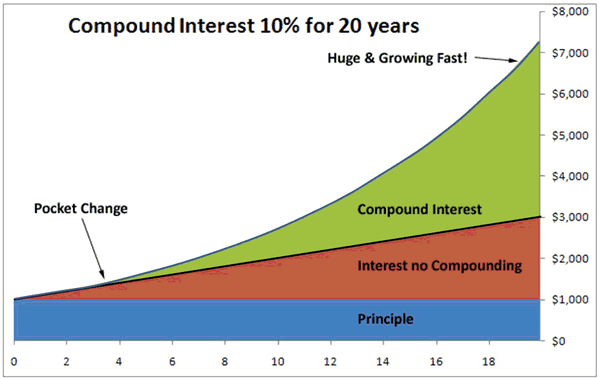
Investing early allows your money to grow through compound returns, meaning your earnings begin generating their own earnings over time. Even small investments can grow significantly over decades. :contentReference[oaicite:0]{index=0}
For example:
- $1,000 invested at 8% annual return
- Left invested for 30 years
- Could grow to over $10,000 without adding another dollar
Now imagine adding money regularly.
That’s how long-term wealth is built.

Step 1: Make Sure You’re Financially Ready to Invest
Before putting your 1000 to invest into the market, check a few basics:
- No high-interest credit card debt
- At least a small emergency fund
- Stable monthly budget
Investing works best when your finances are stable.
Related guide on FluentMoney: Investing For Beginners with 100$
If you’re still building your financial foundation, starting smaller while learning can also be a great approach.
7 Smart Ways to Use Your 1000 to Invest
Here are the most beginner-friendly and practical options.
1. Invest in an S&P 500 Index Fund
For most beginners, index funds are the simplest and safest place to start.
An S&P 500 index fund invests in 500 of the largest companies in the U.S., including Apple, Microsoft, and Amazon.
Benefits:
- Instant diversification
- Very low fees
- Historically strong long-term performance
Many investors simply buy an index fund and hold it for decades.
Example funds include:
- Vanguard S&P 500 ETF (VOO)
- Fidelity ZERO Large Cap Index
- Schwab S&P 500 Index Fund
You can open a brokerage account with a provider like Fidelity.
2. Buy a Total Market ETF
Instead of investing in only the largest companies, a total market ETF invests in thousands of companies across the entire stock market.
This gives you:
- Large companies
- Mid-size companies
- Small companies
All in a single investment.
Popular examples include:
- Vanguard Total Stock Market ETF (VTI)
- Schwab U.S. Broad Market ETF (SCHB)
For beginners with 1000 to invest, this is one of the simplest long-term strategies.
3. Start a Roth IRA
If you want your investment to grow tax-free for retirement, a Roth IRA is one of the best accounts available.
According to the IRS, qualified withdrawals from a Roth IRA in retirement are tax-free, including investment gains.
Benefits:
- Tax-free growth
- Tax-free withdrawals in retirement
- Flexible contributions
Many investors use their first $1,000 to open a Roth IRA and buy index funds inside it.
Official IRS resource.
4. Use a Robo-Advisor
If you want investing to be completely automated, a robo-advisor may be ideal.
Robo-advisors:
- Build a diversified portfolio
- Automatically rebalance it
- Manage risk based on your goals
Typical fees are very low — often around 0.25% per year.
Popular robo-advisors include:
- Betterment
- Wealthfront
- Vanguard Digital Advisor
They’re especially helpful if you don’t want to pick investments yourself.
5. Invest in Fractional Shares
Some individual stocks cost hundreds of dollars per share.
But many brokerages allow fractional investing, meaning you can invest any amount.
For example:
- $100 in Apple
- $100 in Amazon
- $100 in Microsoft
This lets you build a diversified portfolio even with 1000 to invest.
However, beginners should be cautious about investing only in individual stocks. Diversified funds usually carry less risk.
6. Invest in Real Estate (Without Buying Property)
Real estate used to require tens of thousands of dollars.
Now platforms allow investors to start with $500–$1,000 through real estate investment trusts (REITs) or crowdfunding platforms.
This gives you exposure to:
- Apartment buildings
- Commercial real estate
- Real estate development projects
All without buying property yourself.
7. Invest in Yourself
One of the most overlooked ways to use 1000 to invest is improving your earning potential.
Examples:
- Learning a high-income skill
- Taking an online course
- Starting a side hustle
- Building a small business
In many cases, investing in skills or education can generate much higher returns than the stock market.
Related guide on FluentMoney: Airbnb Investing for Beginners
How to Choose the Best Option
The best way to invest $1,000 depends on your goals.
| Goal | Best Option |
|---|---|
| Long-term investing | Index fund |
| Retirement | Roth IRA |
| Hands-off investing | Robo-advisor |
| Learning the market | Fractional shares |
| Diversification | Total market ETF |
Most beginners choose index funds inside a brokerage account or Roth IRA.
It’s simple, diversified, and historically reliable.
Mistakes to Avoid When Investing $1,000
Trying to Get Rich Quickly
Speculative investments and hype stocks can be risky. Long-term investing usually works better.
Investing Without a Plan
Know your goal:
- Retirement
- Long-term wealth
- Passive income
Checking Your Portfolio Daily
Markets fluctuate constantly. Successful investors focus on years, not days.
Conclusion
If you have 1000 to invest, you’re already taking an important step toward financial independence.
You don’t need complex strategies or huge amounts of money.
Start simple:
- Open an investment account
- Buy a diversified fund
- Invest consistently over time
The real power of investing comes from time and consistency, not trying to pick the perfect investment.
Your first $1,000 is just the beginning.
Next Steps
If you’re ready to move forward:
- Open a brokerage account or Roth IRA.
- Invest your first $1,000 in an index fund or ETF.
- Set up automatic monthly contributions.
- Focus on long-term growth.
And remember: investing is a marathon, not a sprint.